Some roof problems look expensive the moment you notice them. A stain on the ceiling. A few shingles that look lifted. Granules in the gutter. A dark patch on the roof. One missing shingle after a windy day. It is normal to look at something like that and think, “Does this mean I need a new roof?”
The honest answer is: not always.
Some roof issues look worse than they are. A few may be repairable. Some may only need maintenance. Others may be warning signs that deserve a closer inspection before they become a bigger problem. The hard part is knowing which is which.
That is where many homeowners feel stuck. You do not want to ignore a real roofing problem, but you also do not want a contractor turning every concern into a full replacement conversation. A helpful roof inspection should give you clarity, not pressure.
Here are five roof problems that can look serious at first glance, what they may actually mean, and when it is worth having an honest roofer take a closer look.
Quick Answer: Do These Roof Problems Always Mean Replacement?
No. Curled shingles, granules in the gutter, small ceiling stains, moss or dark streaks, and a few missing or damaged shingles do not always mean you need a new roof. The right recommendation depends on the age of the roof, how widespread the issue is, whether water is getting in, and whether the roof system is still protecting the home.
An honest roofer should inspect the issue, explain what they see, show you photos when possible, and separate repairable problems from true replacement warning signs.
1. A Few Curled or Lifted Shingles
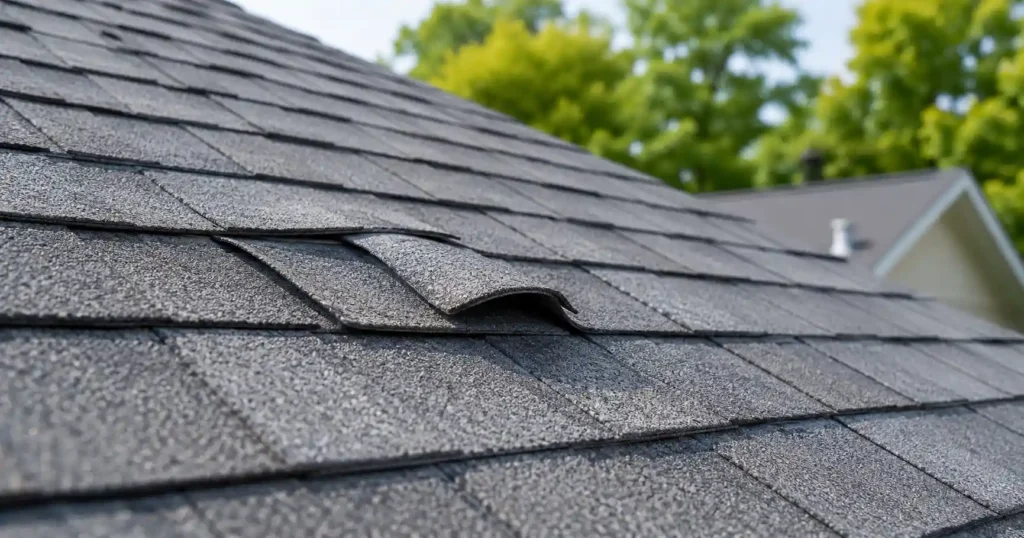
Curled shingles can make a roof look like it is failing fast. From the ground, even a small area of curled or lifted shingles can stand out, especially when the sun hits the roof at an angle. But curled shingles do not always mean the entire roof needs to be replaced.
Sometimes, curling happens in a limited area because of age, heat exposure, poor ventilation, installation issues, or wind lifting a few tabs. If the damage is isolated and the surrounding shingles are still in decent condition, a repair may be enough.
The key question is not, “Are any shingles curled?”
The better question is:
How much of the roof is affected, and is water able to get underneath?
If only a small section is curling, an honest roofer may recommend replacing or securing that section. If curling is widespread across multiple slopes, the roof may be near the end of its useful life.
What an honest inspection should look for
A roofer should check whether the curled shingles are brittle, cracked, loose, or letting water reach the underlayment. They should also look at the overall roof age, roof ventilation, and nearby shingles. If someone looks at one curled shingle and immediately says, “You need a full replacement,” that is worth questioning.
2. Granules in the Gutters or Downspouts
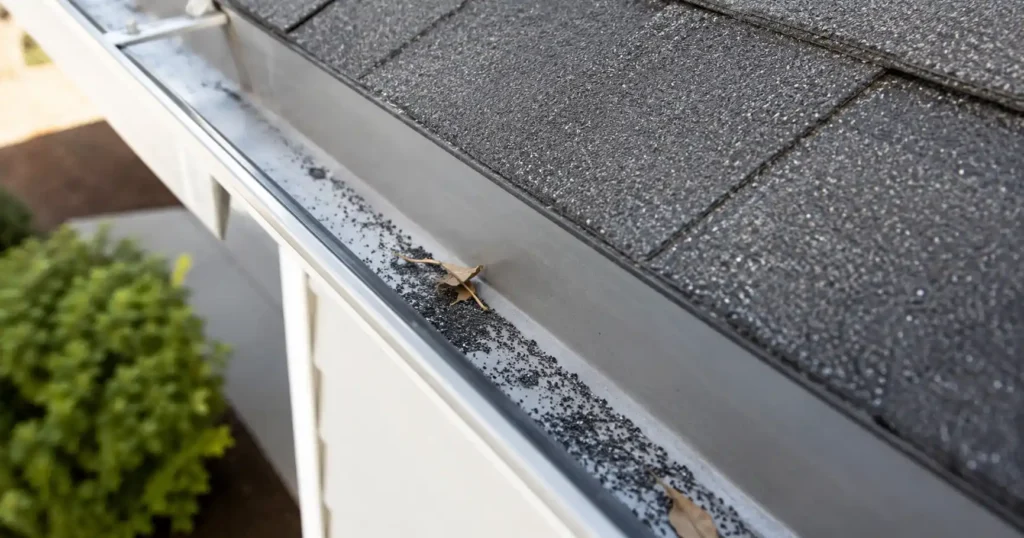
Finding black or sandy-looking granules in your gutters can feel alarming. Many homeowners describe them as little black rocks or gritty debris. Granules are part of asphalt shingles. They help protect the shingle from sun exposure and weather. So yes, granule loss can matter.
But some granule loss is normal, especially on a newer roof after installation or after heavy weather. A small amount in the gutter does not automatically mean the roof is failing. What matters is the pattern.
If you see a small amount of granules after a storm or during seasonal cleaning, that may not be a major issue. If you see heavy granule buildup, bald-looking shingles, exposed asphalt, or uneven patches where the shingles look worn down, that deserves a closer look.
What an honest inspection should look for
A roofer should inspect the roof surface, not just the gutter. The question is whether the shingles still have enough protective granule coverage to perform. Granules in the gutter are a clue. They are not a diagnosis by themselves. A good roofer should explain whether the granule loss appears normal for the roof’s age, storm-related, localized, or widespread enough to suggest the roof is wearing out.
3. A Ceiling Stain That Looks Like a Major Leak
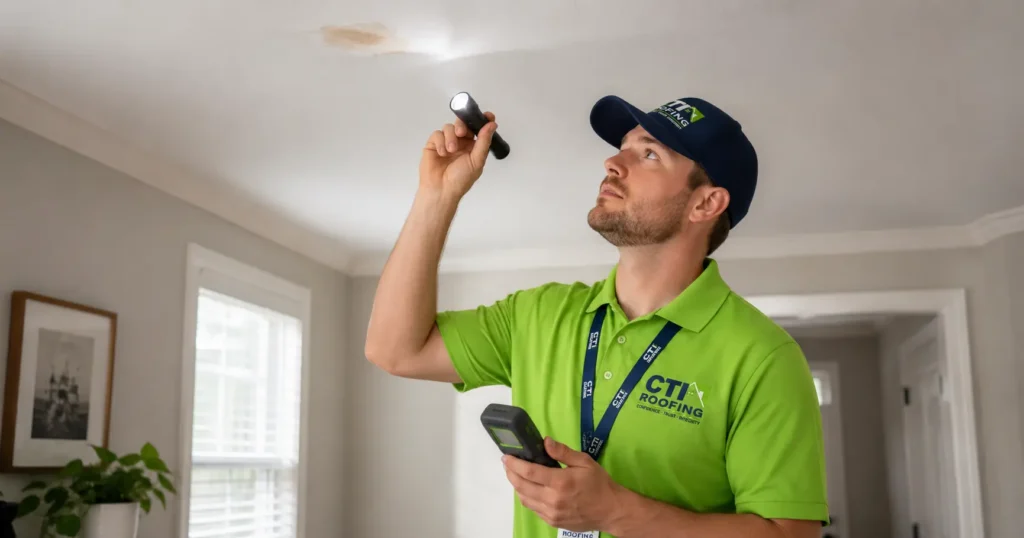
A brown stain on the ceiling can make any homeowner nervous. It is easy to assume the worst: water is getting in, the roof is failing, and a major repair is coming. Sometimes a ceiling stain is a sign of an active roof leak. But not every stain means the roof needs to be replaced. In many cases, the source may be more specific and repairable.
Common causes can include:
- A failing pipe boot
- Damaged flashing
- A small puncture
- A leak around a vent
- Condensation in the attic
- An old stain from a previous issue
- Water traveling from a different area than expected
Roof leaks can be tricky because water does not always drip straight down from the entry point. It can travel along decking, rafters, insulation, or pipes before showing up inside the home. That means the visible stain may look worse than the actual roof repair needed.
What an honest inspection should look for
A roofer should not only look at the stain and guess. They should inspect the roof area above it, check nearby penetrations, look at flashing, and, when needed, review the attic or interior moisture path. If the issue is a pipe boot or small flashing problem, a repair may be the right recommendation. If there are multiple leaks, soft decking, widespread shingle failure, or long-term water damage, that may point to a bigger issue. The goal is to trace the leak, not use the stain as a shortcut to sell a roof.
4. Moss, Algae, or Dark Streaks on the Roof
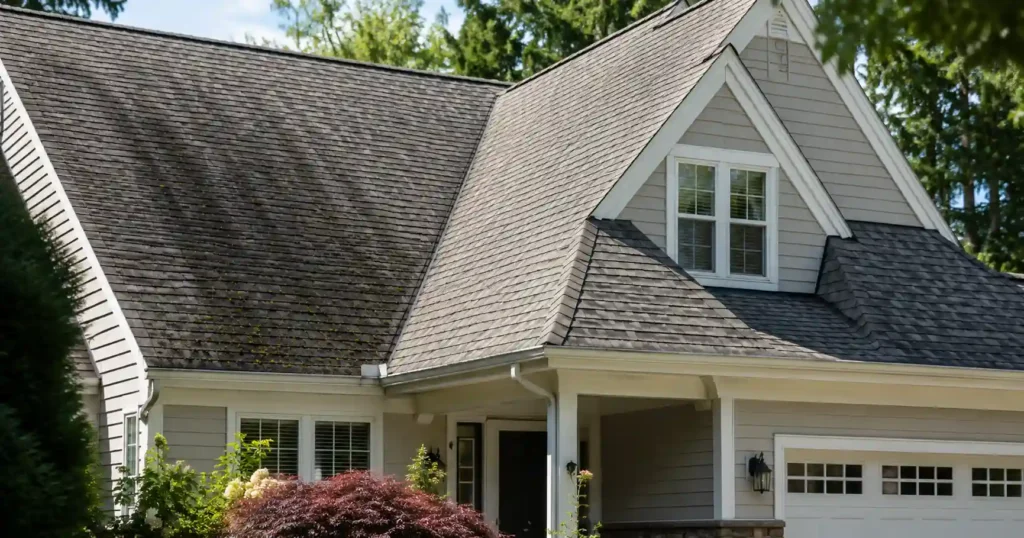
Dark streaks, moss, or discoloration can make a roof look older than it really is. This is one of the most common examples of a roof problem that looks bad visually but may not mean the roof is failing.
Dark streaks are often algae. Moss can grow in shaded or damp areas where moisture lingers. These issues can affect appearance, and moss can become a bigger problem if it traps moisture or lifts shingles over time. But discoloration alone does not automatically mean replacement.
The important thing is whether the growth is only cosmetic, whether it is affecting the shingles, and whether moisture is being held against the roof surface.
What an honest inspection should look for
A roofer should look for lifted shingles, trapped moisture, soft spots, damaged granules, and areas where moss is interfering with water flow. If the roof is otherwise healthy, cleaning or maintenance may be enough. If moss has caused shingle damage or water entry, a repair may be needed in that area. Be careful with aggressive cleaning methods. Pressure washing can damage shingles. A good recommendation should protect the roof, not just make it look cleaner for a week.
5. One or Two Missing Shingles After Wind
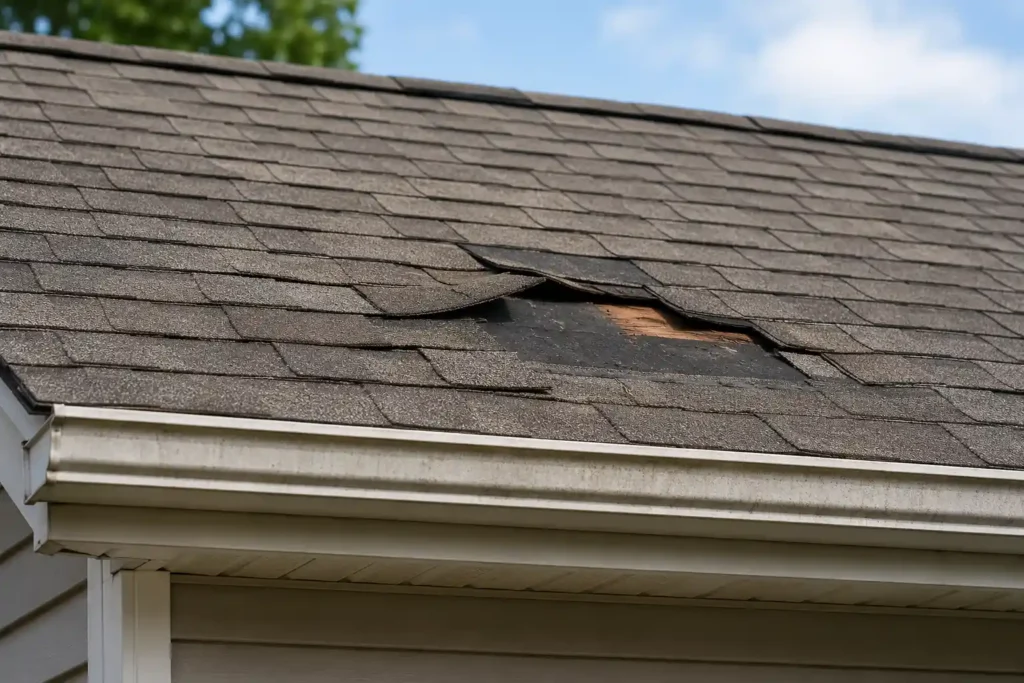
A missing shingle can look dramatic. You see a bare patch on the roof, and it feels like the whole system has been compromised. Sometimes this is urgent, especially if rain is coming or the exposed area is allowing water in. But one or two missing shingles do not automatically mean the entire roof needs replacement.
Wind can lift or remove shingles in specific areas, especially along edges, ridges, valleys, or spots that were already loose. If the surrounding shingles are still flexible and in good shape, a localized repair may solve the problem. The bigger concern is whether the missing shingles are a one-off issue or part of a larger pattern.
What an honest inspection should look for
A roofer should check the surrounding shingles, exposed underlayment, nail patterns, seal strips, roof edges, and any nearby wind damage. If only a few shingles are missing, the roof may be repairable. If shingles are missing across multiple slopes, if many are loose, or if the roof is older and brittle, replacement may be part of the conversation. The difference matters.
A few missing shingles is a repair conversation. A roof that is losing shingles across multiple areas may be a roof system conversation.
When a Roof Problem Is More Serious Than It Looks
Some roof issues really do need prompt attention. Even if you are not ready to call it an emergency, these signs should not be ignored:
- Active water dripping inside the home
- A ceiling stain that is growing
- Soft or sagging roof decking
- Multiple missing shingles across different areas
- Shingles that crumble when touched
- Large areas of exposed underlayment
- Repeated leaks after previous repairs
- Visible storm damage across shingles, vents, flashing, or gutters
These signs do not always guarantee a full replacement, but they do mean the roof should be inspected sooner rather than later.
What an Honest Roofer Should Tell You

A roof inspection should not feel like a sales setup.
A helpful inspection should answer:
- What is actually happening?
- Is the problem isolated or widespread?
- Is water getting into the home?
- Can this be repaired?
- Is replacement necessary now, later, or not at all?
- What happens if the homeowner waits?
- What photos or evidence support the recommendation?
The roofer should be willing to explain the difference between a cosmetic issue, a maintenance issue, a repairable issue, and a true replacement warning sign. That explanation matters because most homeowners cannot safely inspect their own roof in detail. You should not be expected to know roofing terms before you can get an honest answer.
Repair vs. Replacement: The Practical Difference
A repair usually makes sense when the problem is isolated and the rest of the roof is still performing.
Examples may include:
- A damaged pipe boot
- A small flashing issue
- A few missing shingles
- One leak source that can be traced
- Minor wind damage in one area
- Localized shingle damage
Replacement becomes more likely when the issue is widespread, the roof is near the end of its life, or repairs would only be temporary.
Examples may include:
- Widespread shingle deterioration
- Frequent leaks in different areas
- Severe granule loss across the roof
- Brittle shingles that cannot be repaired cleanly
- Multiple slopes showing failure
- Structural or decking concerns
The honest answer is not always the cheaper answer or the bigger answer. It is the answer that matches the condition of the roof.
Why CTI Roofing Takes the Inspection Seriously
At CTI Roofing, the goal of an inspection is not to turn every concern into a full roof replacement. Some homeowners need a replacement. Some need a repair. Some need maintenance. Some simply need to understand what they are looking at.
That is why CTI’s approach is built around giving homeowners a clear explanation of what is actually going on. If a repair is all you need, that is what you should be told. If the roof is showing signs of a bigger issue, you should understand why. A roofing contractor should help you make a confident decision, not pressure you into one.
Clear Next Steps If You Notice One of These Problems
If you have noticed curled shingles, granules in your gutters, a ceiling stain, moss, dark streaks, or missing shingles, start with a simple visual check from the ground.
Do not climb onto the roof if you are not trained to do so. Instead:
- Take a few photos from the ground if you can do so safely.
- Note when you first noticed the issue.
- Check whether the problem appears to be getting worse.
- Look for interior signs like staining, dripping, or musty smells.
- Schedule a roof inspection if you are unsure.
A free roof inspection can help you understand whether the issue is minor, repairable, or something that needs a larger plan.
Schedule a free roof inspection with CTI Roofing. No sales pressure. No obligation. Just an honest look at what is actually going on with your roof.
FAQs About Roof Problems That Look Worse Than They Are
Does one missing shingle mean I need a new roof?
Not usually. One missing shingle may be repairable if the surrounding shingles are still in good condition. However, it should be inspected because exposed areas can allow water in, especially during rain or snow.
Are granules in the gutter always bad?
No. Some granule loss can be normal, especially after installation or heavy weather. Heavy granule buildup, bald spots, or exposed asphalt on shingles may point to more serious wear.
Do curled shingles always mean roof replacement?
Not always. A few curled shingles may be repairable. Widespread curling across the roof may mean the shingles are aging or failing and should be evaluated more closely.
Is a ceiling stain always caused by the roof?
No. A ceiling stain can come from a roof leak, but it can also come from plumbing, condensation, attic ventilation problems, or an old issue that was already repaired. The source should be traced before assuming the roof needs replacement.
Can moss or algae damage a roof?
It can, especially if moss traps moisture or lifts shingles. Dark streaks may be mostly cosmetic, but moss growth should be checked to make sure it is not affecting the roof’s ability to shed water.
How do I know if a roofer is being honest?
An honest roofer should explain what they see, show photos when possible, separate repairable issues from replacement-level problems, and avoid pushing one solution before the inspection is complete. You should feel more informed after the inspection, not more pressured.
Should I get my roof inspected if I am not sure the issue is serious?
Yes. If something looks off and you are unsure what it means, an inspection can give you clarity. The goal is not to assume the worst. The goal is to understand what is actually happening before it becomes more expensive or stressful.