When homeowners think about roof problems, they usually picture missing shingles, storm damage, or water dripping from the ceiling.
But some roof leaks start in much smaller places.
One of those places is the sealant around roof fixtures. That includes areas around plumbing vents, pipe boots, skylights, roof vents, chimneys, flashing, and other spots where something passes through or connects to the roof.
This does not mean every crack in old sealant is an emergency. It also does not mean your roof needs to be replaced. But as temperatures drop, older sealant can become easier to spot because it may dry out, crack, pull away, or lose the flexibility it once had.
If you have never looked closely at those areas before, fall is a good time to understand what they do, what can go wrong, and when it makes sense to have a roofer take a look.
What Roof Sealant Actually Does
Roof sealant is used around certain joints, edges, and roof details to help keep water from entering small gaps.
You may see it around:
- Plumbing vent pipes
- Pipe boots
- Roof vents
- Skylights
- Chimneys
- Flashing edges
- Satellite mounts or old roof penetrations
- Areas where different roofing materials meet
A good roof should not rely on caulk alone to keep water out. Flashing, boots, shingles, underlayment, and proper installation all matter. Sealant is usually part of the water-shedding system, not the whole system.
That distinction matters.
If sealant is being used as the only thing stopping water, the area may already be vulnerable. If the sealant is simply reinforcing a properly flashed area, aging sealant may be a smaller maintenance item.
That is why the real question is not just, “Is the sealant cracked?”
The better question is:
Is this roof detail still shedding water the way it should?
Why Sealant Can Crack When Temperatures Drop
Roof materials expand and contract as temperatures change. In Utah, fall can bring cool nights, warmer afternoons, frost, sun exposure, wind, and early moisture. That daily movement can be hard on older roof materials.
Sealant is designed to stay flexible, but it does not stay new forever.
Over time, exposure to sun, heat, cold, moisture, and roof movement can cause sealant to:
- Dry out
- Shrink
- Crack
- Pull away from the surface
- Separate from flashing or pipe boots
- Become brittle
- Lose adhesion
When temperatures drop, older sealant may no longer move with the surrounding material as well as it used to. Instead of stretching slightly, it may split or open a small gap.
That gap may not leak right away. But it can give water a place to sit, freeze, thaw, or work its way into a vulnerable area over time.
Common Roof Fixtures Where Sealant Problems Show Up
You do not need to climb on your roof to understand where problems often begin. Many roof leak risks happen around penetrations, which is the roofing term for anything that passes through the roof surface.
Here are the areas homeowners should know about.
Plumbing Vent Pipes
Plumbing vents are the pipes that stick up through the roof. They usually have a pipe boot or flashing around the base.
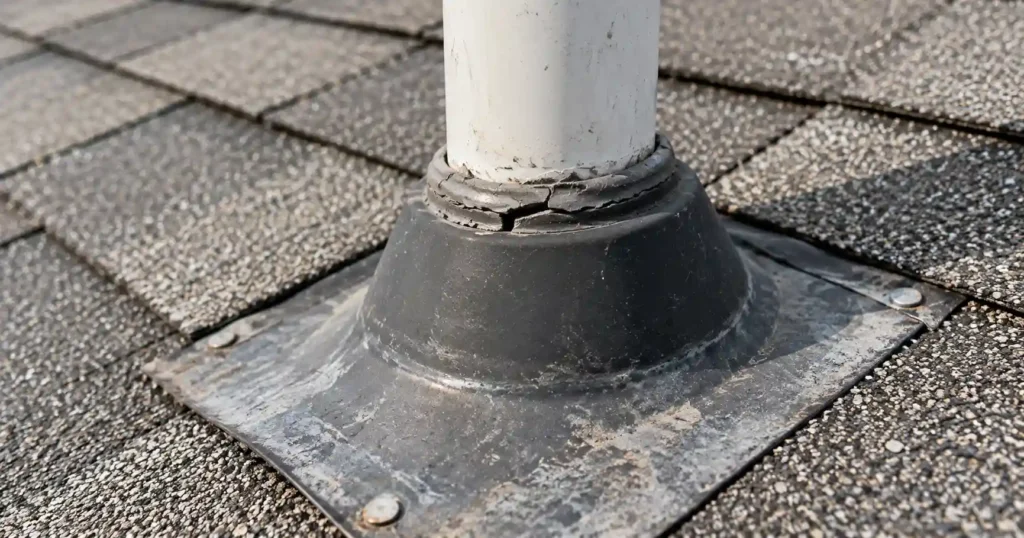
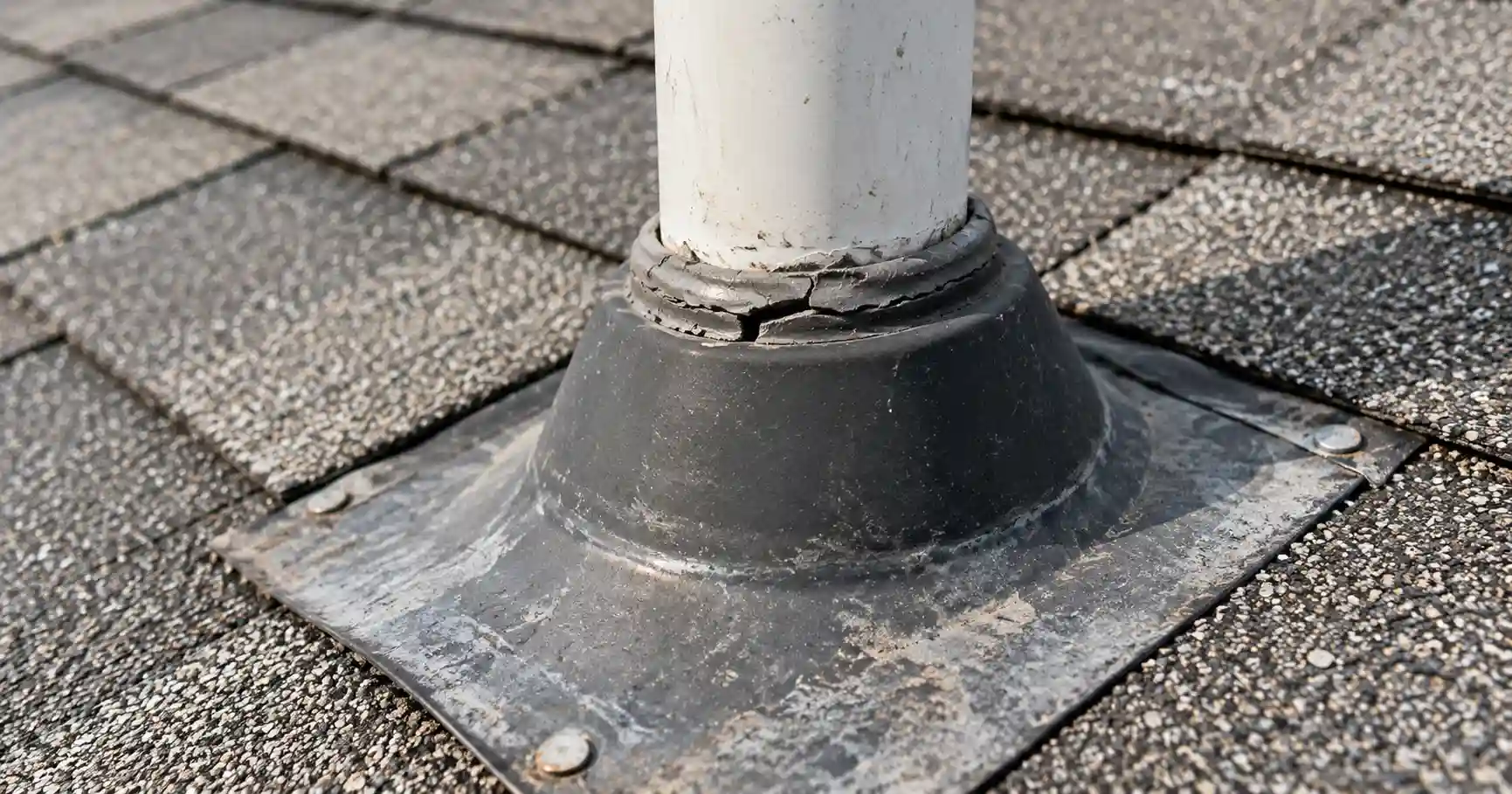
The rubber collar around a pipe boot can crack with age. Sealant around the edge may also dry out or pull away. If water gets past that area, it can follow the pipe into the attic or ceiling.
A plumbing vent leak may show up as a small ceiling stain near a bathroom, laundry room, hallway, or utility area.
Roof Vents
Roof vents help attic air move properly. They may be box vents, ridge vents, exhaust vents, or other vent types.
Because vents interrupt the roof surface, they need to be installed and sealed correctly. Older sealant around the edges can crack, especially if the vent or surrounding shingles have shifted slightly over time.
Skylights
Skylights are one of the most common areas homeowners worry about, and for good reason. They create a large opening in the roof system.
A skylight leak is not always caused by the skylight itself. Sometimes the issue is flashing, sealant, nearby shingles, debris buildup, or condensation. If old sealant around a skylight is cracking, it is worth having the full area checked instead of simply adding more caulk.
Chimneys
Chimneys have several roof transitions: base flashing, step flashing, counterflashing, masonry joints, and sometimes a cricket or saddle behind the chimney.
Old sealant around chimney flashing can dry out or separate. But chimney leaks can also come from masonry, cracked caps, poor flashing, or water running behind the chimney.
This is another area where a proper inspection matters. The visible crack may not be the whole story.
Flashing Edges
Flashing is metal used to direct water away from roof transitions. You may find it along walls, valleys, chimneys, vents, and other roof intersections.
If flashing moves, loosens, rusts, lifts, or separates, sealant alone may not solve the issue. In some cases, the flashing needs to be repaired, re-secured, or replaced.
Why This Matters More Before Winter
Cold weather does not automatically cause roof leaks. But it can expose weak points that were already developing.
Before winter, your roof may deal with:
- Rain
- Frost
- Snow
- Ice
- Freeze-thaw cycles
- Debris in valleys or gutters
- Moisture sitting longer on shaded areas
- Temperature swings between day and night
If sealant around a roof fixture has already cracked or pulled away, winter moisture can make the weak spot more noticeable.
This is especially true when snow melts during the day and refreezes at night. Water can move into small openings, then expand when it freezes. Over time, that can make a small gap worse.
Again, this does not mean panic. It means the area is worth checking before winter weather makes inspection or repair more difficult.
Signs Old Roof Sealant May Need Attention
From the ground, you may not be able to see every detail. But there are a few signs homeowners can watch for.
Look for:
- Dried-out or cracked sealant around roof fixtures
- Gaps around pipe boots, vents, or flashing
- Sealant that looks separated from the surface
- Lifted flashing edges
- Missing or deteriorated rubber around vent pipes
- Rust stains near metal flashing
- Water stains on ceiling drywall
- Damp insulation in the attic
- Musty smells after rain or snowmelt
- New stains near bathrooms, chimneys, skylights, or exterior walls
If you are not comfortable checking these areas safely, do not climb on the roof. A ground-level look, attic check, or professional roof inspection is safer.
Does Cracked Sealant Mean You Need a New Roof?
No.
Cracked roof sealant does not automatically mean you need a roof replacement.
Sometimes it means a small maintenance repair is needed. Sometimes the fixture needs new flashing or a new pipe boot. Sometimes the sealant looks old, but the actual water-shedding system is still working. And sometimes the cracked sealant is a clue that a larger installation issue should be checked.
The important thing is not to guess.
A good roofing inspection should answer:
- Is water getting in?
- Is the flashing installed correctly?
- Is the pipe boot or vent still in good shape?
- Is the sealant the only thing protecting that area?
- Is this a repair, maintenance item, or something to monitor?
- Are there nearby shingles or materials that are also wearing out?
For an unaware homeowner, this is the most helpful way to think about it:
Old sealant is not a diagnosis. It is a clue.
Should You Add More Sealant Yourself?
It depends, but be careful.
Adding more sealant over old, cracked, dirty, or loose material may not fix the issue. It can sometimes hide the real problem and make future inspection harder.
Before applying anything, a roofer would typically want to know:
- What material is being sealed
- Whether the surface is clean and dry
- Whether the flashing is properly installed
- Whether the existing sealant should be removed
- Whether the roof material requires a specific sealant type
- Whether the issue is actually a failed boot, lifted flashing, or damaged shingles
This is why quick DIY caulking can be risky around roof penetrations. It may look better from the outside while the actual leak path remains open.
If the concern is minor and accessible, a roofer may be able to make a straightforward repair. If the issue is more involved, they can explain why.
When to Schedule a Roof Inspection
You may want a roof inspection before winter if:
- Your roof is 10–15+ years old
- You see cracked sealant around vents or fixtures
- You notice stains near a ceiling, skylight, chimney, or exterior wall
- You recently had strong wind, hail, or heavy rain
- You see cracked pipe boots or lifted flashing
- You are not sure when the roof was last inspected
- You want peace of mind before snow and ice arrive
The goal is not to create a project where one does not exist. The goal is to understand what condition your roof is in before small issues become harder to evaluate.
CTI Roofing offers free roof inspections for homeowners who want a clear look at their roof without pressure.
What CTI Roofing Looks For Around Roof Fixtures
When CTI Roofing inspects roof fixtures, the team is not just looking for one cracked bead of caulk.
They may look at:
- Pipe boots
- Vent flashing
- Chimney flashing
- Skylight edges
- Shingle condition around penetrations
- Exposed fasteners
- Old repairs
- Sealant gaps
- Signs of water entry
- Attic moisture clues
- Storm-related wear or movement
If something only needs a small repair, that should be the recommendation. If the area is fine for now, that should be explained too.
That is the kind of inspection most homeowners actually want: not a sales pitch, not a scare tactic, just a clear answer.
For related service information, visit CTI’s roof repair page or their page on vent repair.
A Simple Homeowner Check Before Winter
You do not need to become a roofing expert. But once or twice a year, especially before winter, it helps to pay attention to a few roof details.
From the ground, look for:
- Vents that appear tilted, cracked, or loose
- Missing shingles around fixtures
- Exposed metal edges
- Debris collecting near chimneys or skylights
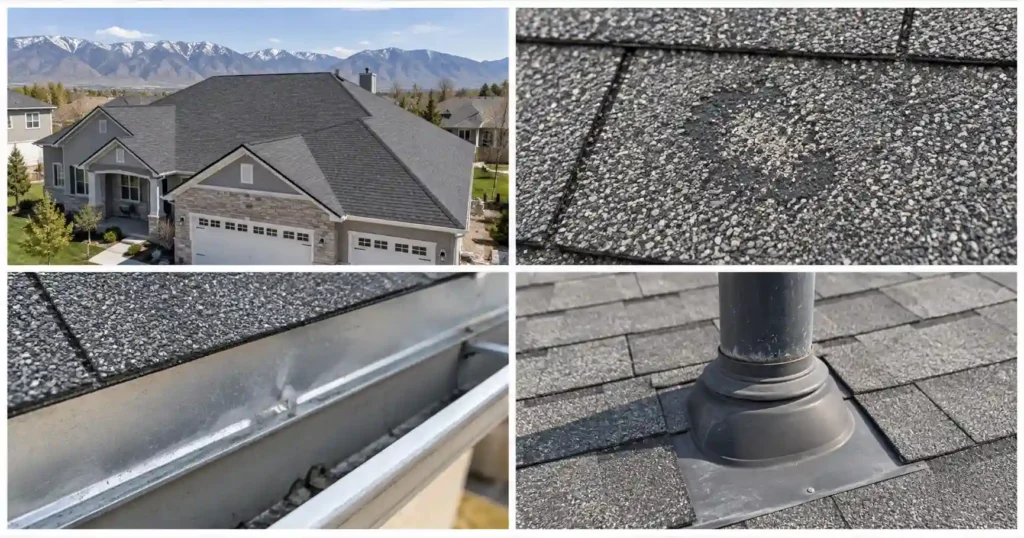
- Gutter granules or roof debris
- Areas that look different from the rest of the roof
Inside the home, look for:
- Small ceiling stains
- Paint bubbling
- Moisture around skylight wells
- Musty smells in upper rooms
- Dark spots in the attic
- Damp insulation near roof penetrations
If everything looks normal, great. If something seems questionable, document it with photos and schedule an inspection.
Helpful External Resources
For homeowners who want to understand why roof penetrations matter, the U.S. Department of Energy’s Building America Solution Center explains how roof penetrations such as vents, chimneys, skylights, and other openings should be flashed and sealed as part of the roof’s water control layer: Flashing of Penetrations in Existing Roofs.
The Insurance Institute for Business & Home Safety also recommends checking around chimneys, pipes, skylights, exhaust fans, and vents for gaps or missing sealant as part of roof maintenance: Extend the Life of Your Roof.
FAQs About Roof Sealant Cracking
What is roof sealant cracking?
Roof sealant cracking happens when caulk or sealant around roof details dries out, splits, shrinks, or pulls away from the surface. It often shows up around vents, pipe boots, skylights, chimneys, flashing, or other roof penetrations.
Is cracked roof sealant serious?
It can be, but not always. Cracked sealant does not automatically mean your roof is leaking or failing. It does mean the area should be checked, especially if the sealant is around a roof penetration where water could enter.
Why does roof sealant crack when temperatures drop?
Sealant can become less flexible as it ages. When temperatures rise and fall, roof materials expand and contract. Older sealant may not move with the roof as well, which can cause it to split, separate, or expose small gaps.
Can I just caulk over cracked roof sealant?
Sometimes a small sealant repair may be appropriate, but simply adding new caulk over old material may not solve the real issue. The area may need cleaning, old sealant removal, flashing repair, or a new pipe boot. It is best to understand the cause before covering it up.
Where is roof sealant most likely to fail?
Common areas include plumbing vent pipes, roof vents, skylights, chimneys, flashing edges, exposed fasteners, and old roof penetrations. These areas are more vulnerable because they interrupt the roof surface.
Does cracked sealant mean I need a roof replacement?
No. Many sealant issues can be repaired without replacing the roof. A proper inspection can help determine whether the issue is minor, repairable, worth monitoring, or connected to a larger roof problem.
How often should roof fixtures be checked?
A good habit is to have roof fixtures checked at least once a year, especially before winter or after strong storms. If your roof is older or you have had previous leak issues, more frequent checks may be helpful.
What should I do if I see cracked sealant around a vent or skylight?
Take photos if you can do so safely, avoid climbing on the roof, and schedule a roof inspection. A roofer can check whether the sealant is cosmetic aging, a minor repair need, or a sign of a more vulnerable roof detail.
Clear Next Step
Old sealant around roof fixtures is easy to overlook because it does not always look dramatic. But vents, pipe boots, skylights, chimneys, and flashing are some of the places where small roof problems can begin.
If you are not sure whether the sealant around your roof fixtures is still doing its job, CTI Roofing can take a look and explain what is actually happening.
No pressure. No obligation. Just an honest look at where things stand.
Schedule a free roof inspection with CTI Roofing or learn more about CTI’s roofing services in Northern Utah.