Hail can hit your roof for five minutes… and cause damage that lasts for years.
The frustrating part?
You might not even know it happened.
No leaks. No obvious cracks. Nothing that screams “problem.” But when you go to file a claim, suddenly the insurance company says there’s “not enough damage” or calls it “normal wear and tear.”
Now you’re stuck.
This is where understanding what insurance adjusters actually look for changes everything.
Why Hail Damage Is So Often Missed
Hail damage doesn’t always leave behind dramatic signs.
Unlike wind, which can rip shingles off entirely, hail tends to create impact damage that weakens the roof without destroying it on the surface. From the ground, everything can still look intact.
But up close, it’s a different story.
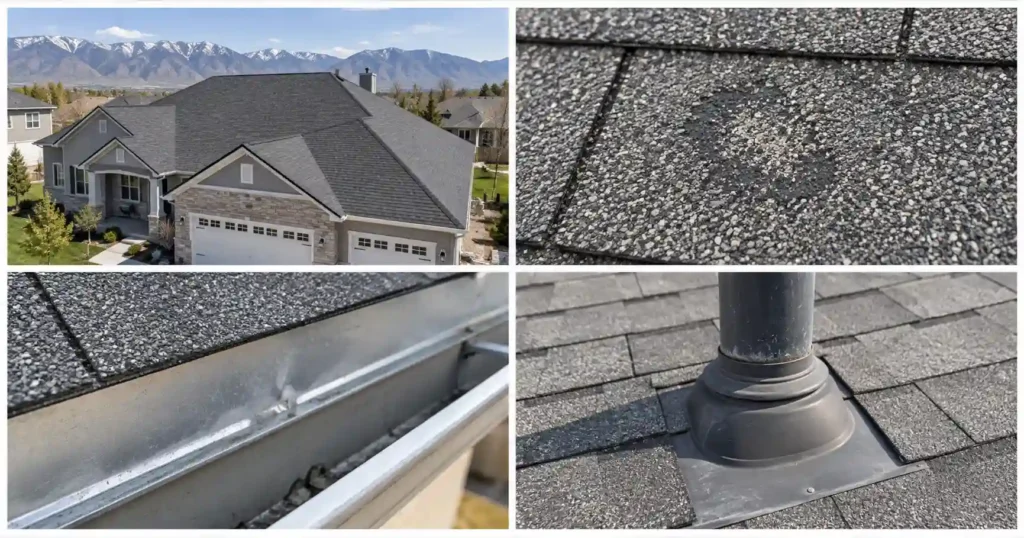
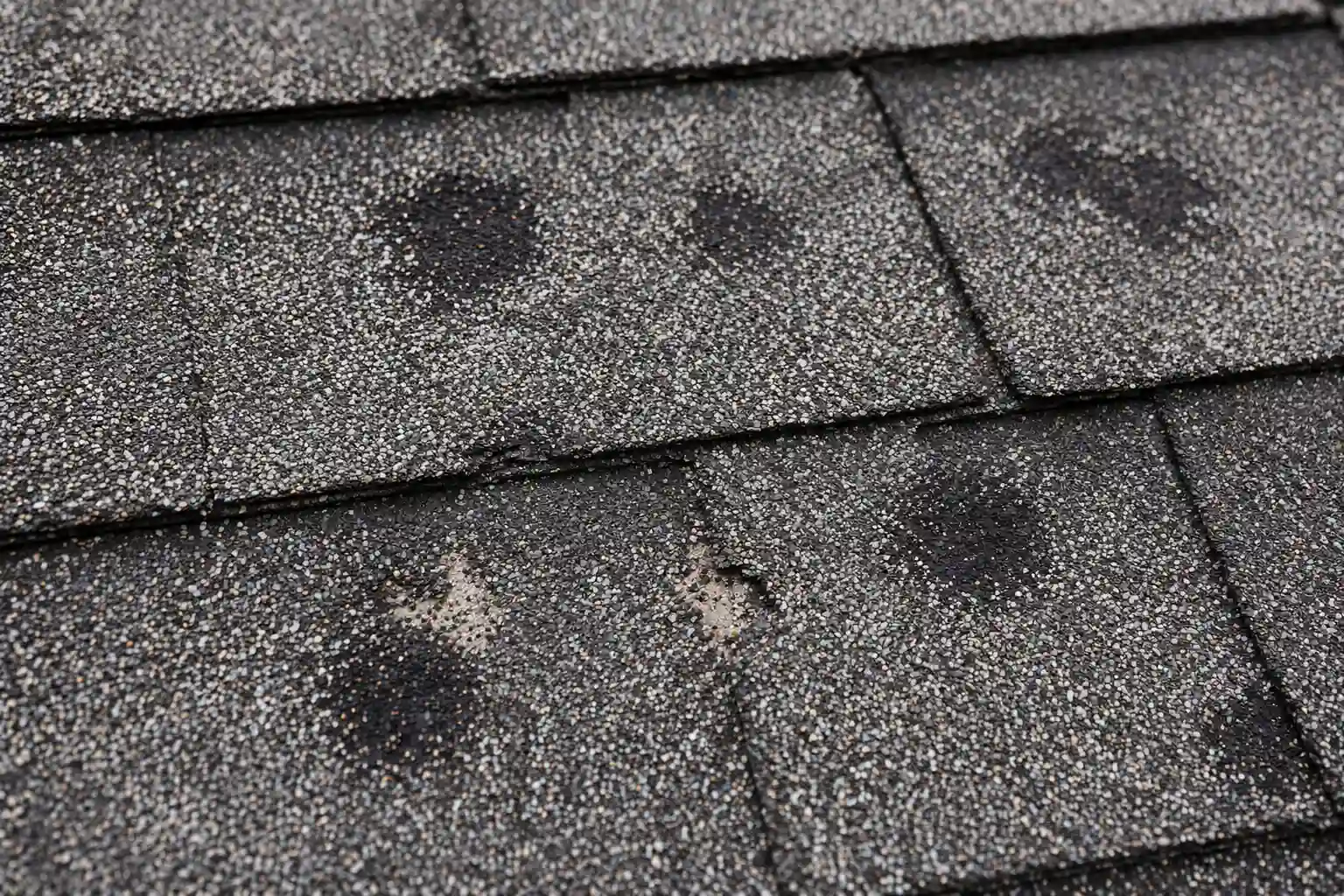
Each hailstone can knock away protective granules, create soft spots in shingles, and expose the underlying material. These small impact points don’t always cause immediate leaks, but they significantly shorten the lifespan of your roof.
Over time, those weakened areas break down faster, especially with Utah’s temperature swings and seasonal storms.
That’s why many homeowners don’t realize they have hail damage until months later, often when it’s harder to prove it came from a specific storm.

What Actually Qualifies as Hail Damage
Not all damage is treated equally by insurance companies.
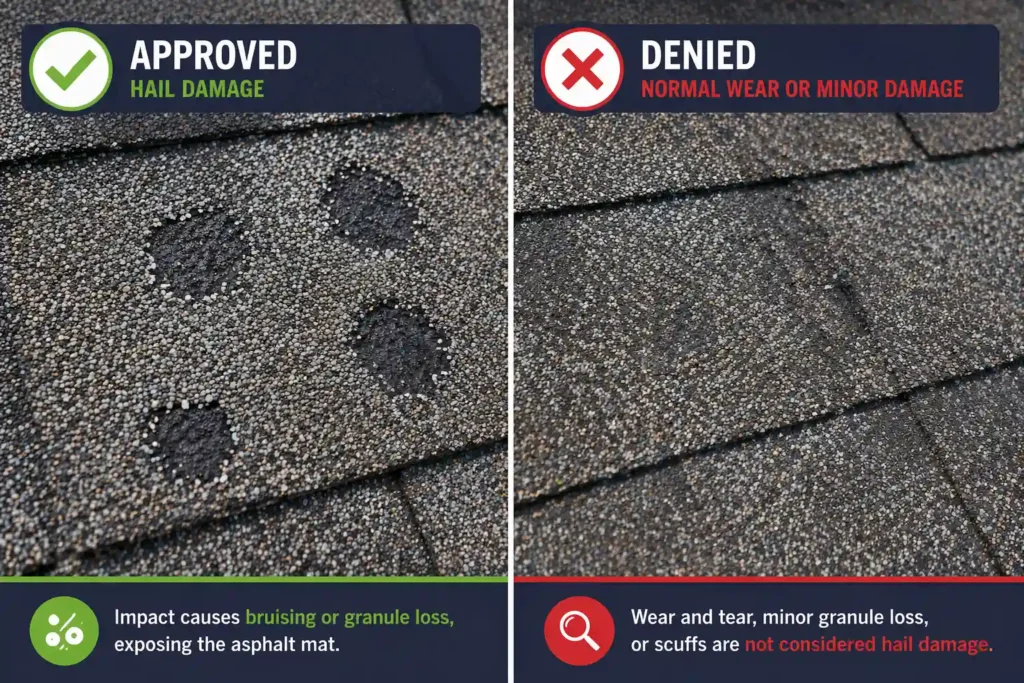
To qualify, the damage typically needs to be tied to a specific storm event and show clear signs of impact rather than general aging.
This often includes:
- Loss of granules exposing the asphalt layer
- Soft or “bruised” areas on shingles
- Circular or random impact patterns across the roof
- Damage to vents, flashing, or gutters consistent with hail strikes
The key here isn’t just that damage exists. It’s because it matches the characteristics of hail impact.
That distinction is where many claims succeed or fail.
What Insurance Adjusters Actually Look For
When an adjuster inspects your roof, they’re not just scanning for damage. They’re evaluating patterns, consistency, and cause.
Here’s how that typically breaks down:
| Area | What They’re Evaluating |
| Shingles | Impact marks, granule loss, soft spots |
| Roof slopes | Whether damage is consistent across sections |
| Flashing & vents | Dents or impact signs |
| Gutters & downspouts | Evidence of hail strikes |
| Overall pattern | Random vs uniform wear |
Adjusters are trained to distinguish between storm damage and natural aging.
If the damage looks random and matches the direction and size of a known storm event, it’s more likely to be approved. If it looks uniform or gradual, it may be labeled as wear and tear.
Why So Many Claims Get Denied
Most homeowners assume that if there’s damage, insurance will cover it.
That’s not always how it works.
Claims are commonly denied for a few key reasons:
- Damage is classified as wear and tear instead of storm-related
- Lack of documentation showing when the damage occurred
- Delay in filing the claim, making it harder to tie damage to a specific event
In many cases, it’s not that damage isn’t there. It’s that it wasn’t presented in a way that meets the insurance company’s criteria.
The Role of a Professional Inspection (Before You File a Claim)
This is where most homeowners go wrong.
They file a claim first, then figure out the details later.
The smarter approach is the opposite.
A professional inspection before filing gives you:
- Clear confirmation of whether hail damage exists
- Documentation that supports your claim
- Insight into whether filing is even the right move
This prevents unnecessary claims, reduces the risk of denial, and puts you in a stronger position if damage is present.
It also helps you understand whether you’re dealing with repair-level damage or something that points toward full replacement.
If you want to see how hail damage fits into overall roof lifespan, costs, and replacement decisions, read 👉 The Complete Homeowner’s Guide to Roof Replacement in Utah (Costs, Timing, Storm Damage & What to Expect).
How Hail Damage Turns Into Bigger Problems Over Time
Even minor hail damage can lead to major issues if it’s ignored.
Once the protective layer of a shingle is compromised, it becomes more vulnerable to UV exposure, moisture, and temperature changes. Over time, those weakened areas begin to crack, dry out, and fail.
What started as a few impact points can eventually lead to leaks, structural damage, and costly repairs.
This is especially true in Utah, where roofs are already under stress from seasonal extremes.
In other words, hail damage isn’t just about what happened during the storm. It’s about what happens after.
What Utah Homeowners Should Do After a Hailstorm
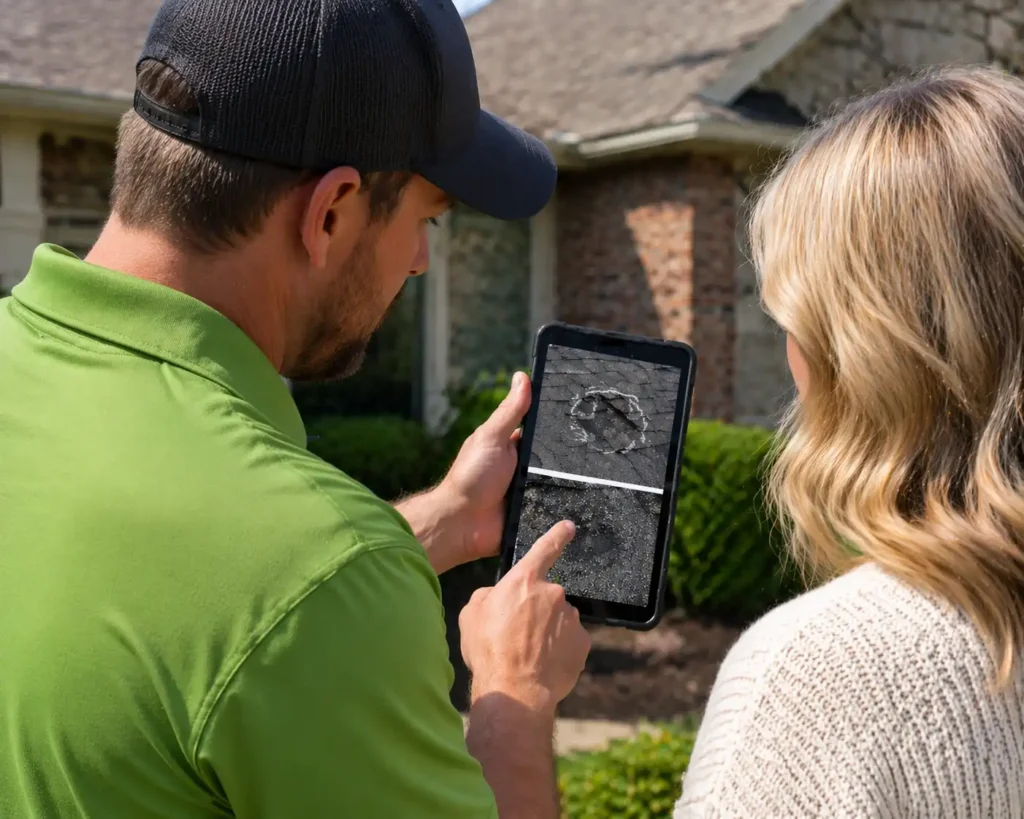
After a hailstorm, it’s worth taking the situation seriously even if nothing looks wrong at first.
Start with a basic ground-level check. Look for dents in gutters, damage to outdoor fixtures, or debris around your property. These can all be indicators that your roof took a hit.
But understand that this only tells part of the story.
A proper inspection looks at impact patterns, material condition, and areas that aren’t visible from the ground. That’s where the real answers come from.
Schedule a Roof Inspection Before Filing a Claim
If you think your roof may have hail damage, the best next step is to get a professional inspection before contacting your insurance company.
This gives you clarity, documentation, and confidence in how to move forward.
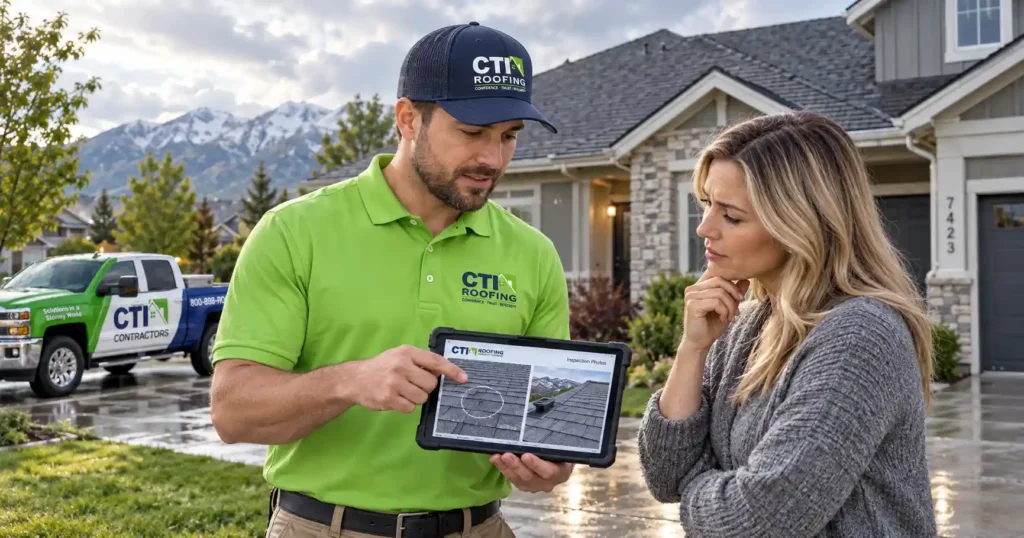
At CTI Roofing, we provide detailed, no-pressure inspections designed to help homeowners understand exactly what they’re dealing with.
Schedule your inspection today and find out if your roof has hail damage before you file a claim.
What You’ll Get
- A detailed hail damage assessment
- Documentation that can support an insurance claim
- Honest guidance on whether to file or not
- Clear next steps based on your roof’s condition