Snow on a roof may look harmless, especially after a light snowfall. But over time, snow accumulation can place significant stress on a roofing system, particularly when snow becomes heavy, compacted, or mixed with ice. Many homeowners don’t realize there’s a problem until sagging, leaks, or structural issues begin to appear.
Understanding how snow load affects your roof, what warning signs to watch for, and when action may be necessary can help prevent damage during the winter months. This guide explains how snow load works and how to recognize when it becomes a concern.
What Snow Load Means for Your Roof
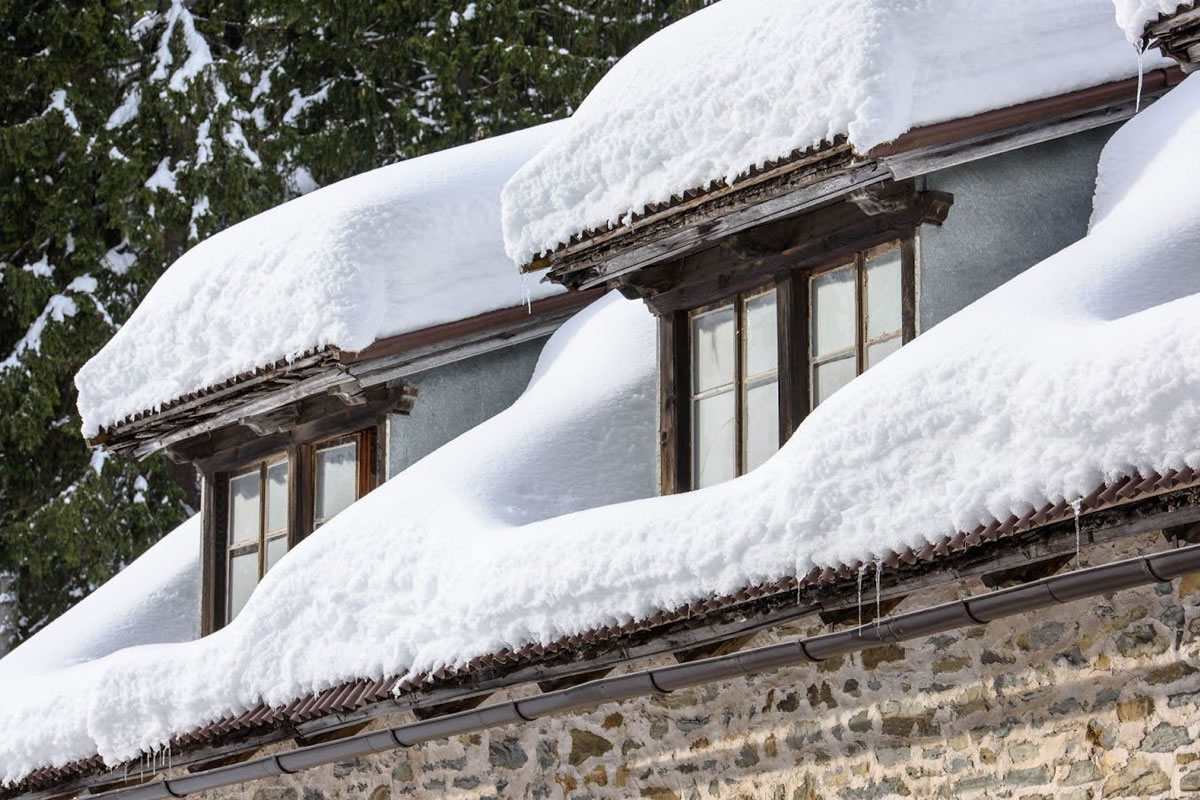
Snow load refers to the weight of snow and ice sitting on a roof. While roofs are designed to handle a certain amount of weight, that capacity can vary depending on the roof’s design, age, and condition.
Several factors affect how much weight your roof is carrying:
- The depth of snow accumulation
- Whether the snow is dry or wet
- Ice buildup beneath snow layers
- Roof slope and construction type
- Previous roof repairs or aging materials
If you are concerned that your roof’s age is making it less resilient to these weights, a professional roof inspection can evaluate your home’s structural integrity.
Why Snow Load Becomes a Winter Problem
Snow load becomes a concern when accumulation happens faster than it can safely melt or slide off. This is especially common during long periods of cold weather followed by short warming cycles.
As snow builds up:
- Weight increases across the roof structure
- Ice may form beneath the snow layer
- Drainage becomes restricted
- Stress concentrates in certain roof areas
Over time, this pressure can contribute to structural strain, roof sagging, or leaks, especially in older homes or roofs with limited slope. If you notice leaks starting during the thaw, you may have compromised seals that require vent repair or flashing adjustments.
Signs That Snow Load May Be Too Much
Snow load problems aren’t always obvious right away. In many cases, the warning signs appear inside the home before anything is visible on the roof.
Common indicators include:
- Sagging ceilings or rooflines
- Cracking sounds from the attic or ceiling
- Doors or windows suddenly sticking
- Water stains or moisture during snowmelt
- Visible roof deflection
If any of these symptoms appear during winter, snow load may be placing excessive stress on the structure.
How Ice and Snow Work Together to Cause Damage
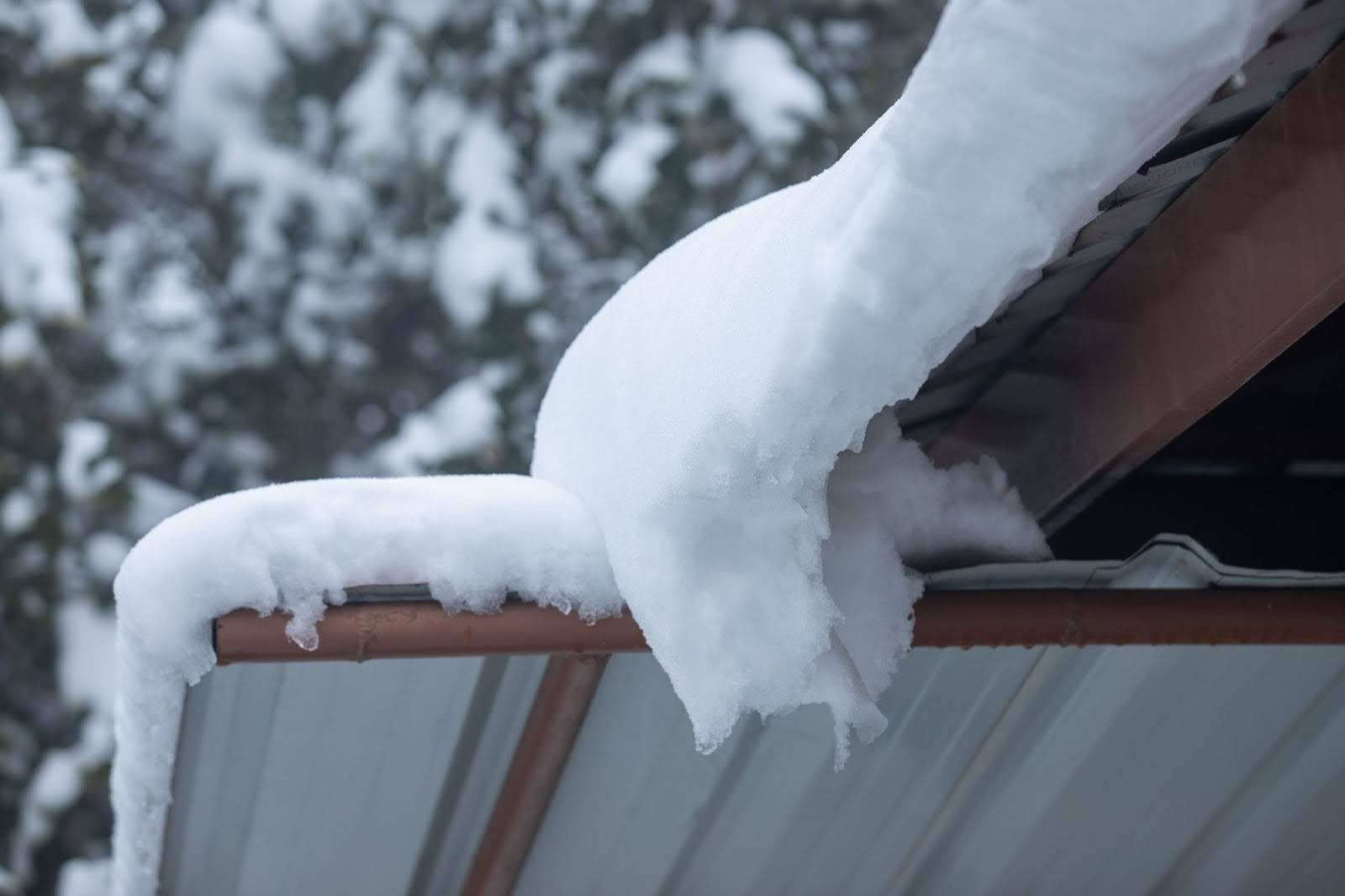
Snow alone isn’t always the problem. Ice buildup often makes the situation worse.
When snow melts and refreezes:
- Ice adds significant weight
- Drainage paths become blocked
- Water can back up beneath shingles
- Ice dams may begin to form
This is the primary driver behind ice dams, which force water beneath shingles. To prevent this, your home needs a best-in-class roofing system designed specifically for the heavy cycles we see in the Intermountain West.
Roof Areas Most Affected by Snow Load
Certain areas of the roof are more vulnerable to heavy snow accumulation than others:
- Roof valleys where snow collects
- Low-slope or flat roof sections
- Areas near chimneys or skylights
- Roof edges where ice forms
- Older roof sections with prior repairs
These areas often require specialized roofing services to ensure they are reinforced with high-grade underlayment and proper flashing.
When Snow Load Becomes a Safety Concern

Not every snow-covered roof is in danger, but some situations require closer attention. You should consider a digital roof inspection if snow accumulation remains for extended periods without shedding or if the roof appears uneven.
You should consider professional help if:
- Snow accumulation remains for extended periods
- Ice dams form repeatedly
- The roof appears uneven or sagging
- Cracks appear inside ceilings or walls
- Leaks begin during snowmelt
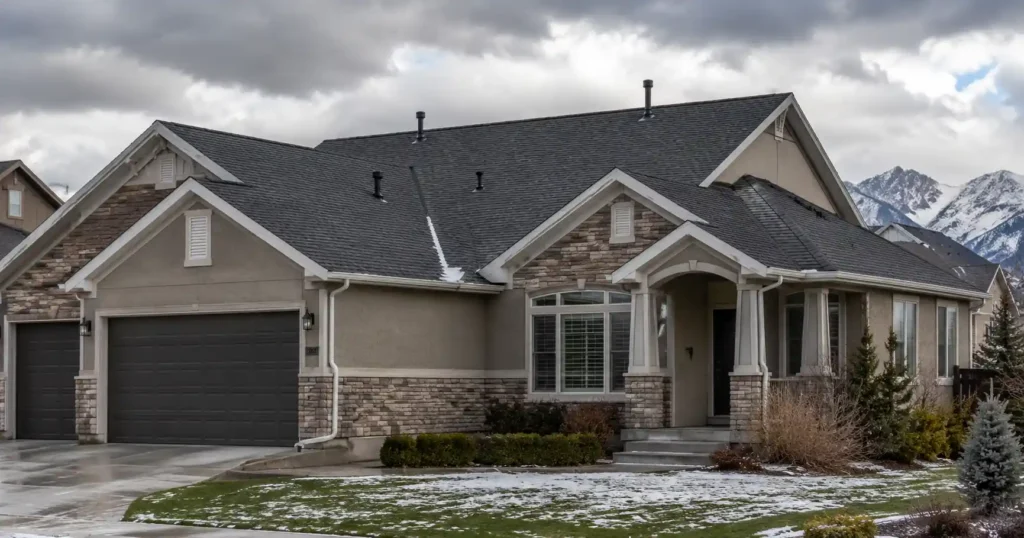
For residents in heavy-snow regions like Salt Lake City, monitoring these loads is a critical part of seasonal homeownership to avoid a catastrophic failure or an unexpected roof replacement.
Preventing Snow Load Issues Before They Start
While you can’t control the weather, there are steps that help reduce snow-related risks:
- Maintain proper attic insulation
- Ensure balanced attic ventilation
- Keep gutters clear before winter
- Address roof damage promptly
- Monitor snow buildup after major storms
These steps help prevent uneven melting, ice formation, and excessive weight buildup.
For a broader look at winter roof protection, our complete winter roof maintenance guide explains how snow load fits into overall cold-weather care.
How Snow Load Fits Into Overall Winter Roof Health
Snow load rarely acts alone. It often combines with ice dams, freeze–thaw cycles, and moisture buildup to create larger roofing problems. When these factors overlap, even a well-built roof can experience stress.
Understanding how snow weight affects your roof makes it easier to recognize early warning signs and take action before damage spreads.
Knowing When Snow Becomes a Problem
Snow on your roof isn’t automatically dangerous, but too much weight over time can lead to serious issues. Paying attention to accumulation, watching for warning signs, and understanding how snow interacts with your roof can help you avoid costly repairs.
If snow-related concerns keep coming up each winter, having a roof inspection can provide clarity and peace of mind. Early awareness is often the key to preventing long-term damage.